




Unmatched support.Thank you for making it simple.


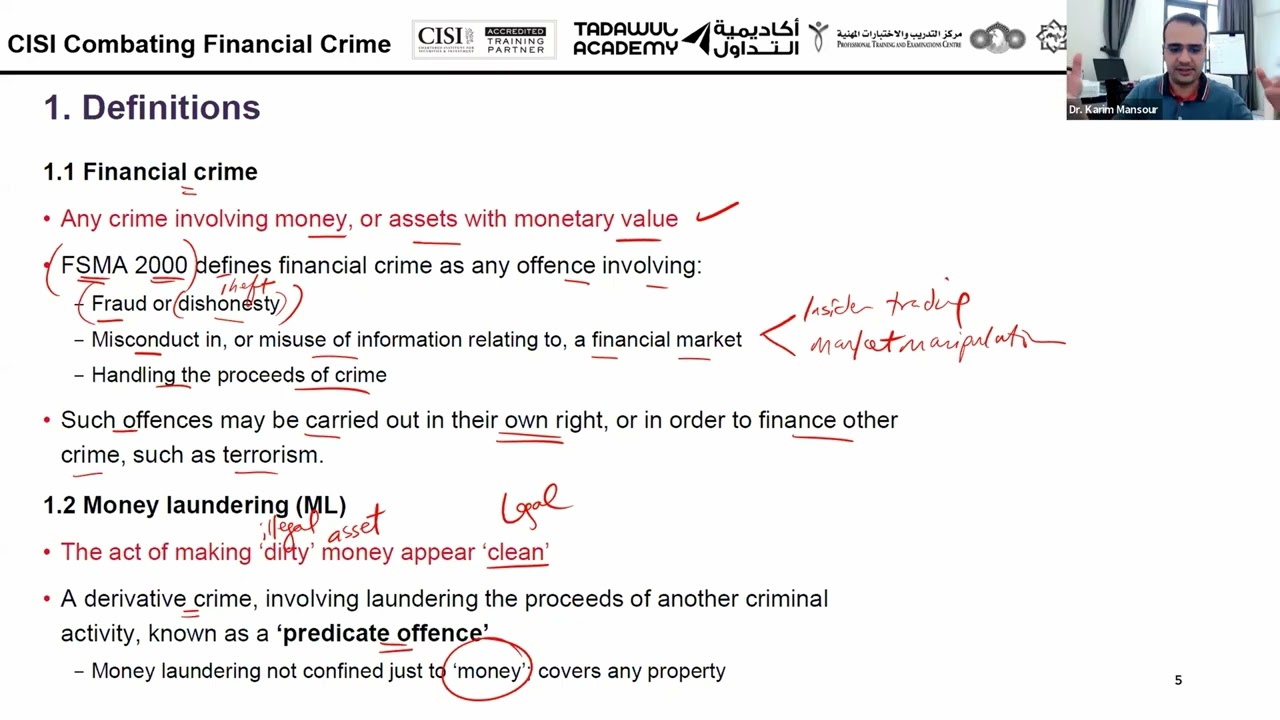
Video lectures
Mock exam questions
Exam preparation highlights
Ask the trainer where really responding back to any questions you have.
Much appreciation
Mr karim Mansour

Highly Recommended

The video lessons, summaries, and mock exams cover all the key concepts from the study materials and really helped me focus on what matters most. You also get valuable insights into the real exam structure and question style, which makes a big difference.
Special thanks to Dr. Karim Mansour – your support and clear explanations made the entire process much easier. Thanks again!
What is included
- Recorded video lectures covering every element of the syllabus, chapter by chapter
- Chapter summary slides and study notes for revision
- Multiple-choice practice questions designed around the CISI examination format, organised by chapter
- An Ask the Trainer section for questions on the material
- Three months access to the premium job vacancies in the UK, the GCC, Egypt and India
- We DON’T offer live classes.
- Exam fees are NOT included in the course price. They are paid separately to CISI.
- Official CISI study book is NOT included in the course price. CISI doesn’t allow us to distribute it. You can get it from them when you book the exam.
The practice questions are written by Tadawul Academy for preparation. CISI doesn’t publish official exam questions or past papers.
Every subscription includes 3 months access to our banking and finance job listings. Hundreds of current openings in compliance, AML, financial-crime prevention, KYC, onboarding, sanctions and risk across banks and financial institutions in London, Dubai, Abu Dhabi, Saudi Arabia, Qatar, Egypt and India — including roles that ask for CISI qualifications by name. No other CISI training provider gives you this.
The CISI Combating Financial Crime (CFC) exam is 50 multiple-choice questions in one hour, and the marks are not spread evenly. Financial Crime Risk Management alone carries 13 of the 50 — more than Terrorist Financing, Economic Sanctions and Fraud and Market Abuse put together. This course covers all eight elements while concentrating your study time where the marks are. Work through the syllabus at your own pace alongside the official CISI workbook, then use the practice questions to find what you cannot yet apply under exam conditions.
Try Two Chapters Free → Create an account on our e-learning portal and see the lectures, slides and questions before you buy.
- 95% pass rate among our students.
- Over 1,000 five-star Google reviews.
- Fully recorded and self-paced — start today, study at any hour.
The CISI examination is booked and paid for separately, directly with CISI. The price on this page covers the Tadawul Academy preparation course only. Current CISI fees are set out below.
Who this Combating Financial Crime course is for
The syllabus takes a global view of financial crime rather than working through one national rulebook, which makes it useful to:
- Compliance officers, Money Laundering Reporting Officers and nominated officers, and anyone deputising for them
- AML, sanctions, fraud and transaction-monitoring analysts
- KYC, customer due diligence, onboarding and client-review teams
- Internal audit, operational risk and governance staff
- People working in regulation, supervision, law enforcement, trade and commerce
- Candidates taking this unit as part of the Investment Operations Certificate
There are no entry requirements. CISI advises English to CEFR B2 level: several questions describe a situation in three or four lines, and the answer turns on reading it precisely.
What passing the CFC exam awards you
One exam gives you the CISI Level 3 Award in Combating Financial Crime, a complete qualification in its own right, and entitles you to apply for CISI Affiliate membership. Total qualification time is 81 hours. You hold free CISI Student membership while you are studying.
It is not the Level 3 Certificate in Combating Financial Crime, which is this exam plus a CISI regulatory unit — and you are exempt from that regulatory paper if you hold one through another route, such as the Investment Operations Certificate. The Certificate is 162 hours. This unit also counts towards the IOC itself. Check which of the three you need before booking: the exam you sit is the same one in every case.
What the CISI Combating Financial Crime exam covers
The current specification is syllabus version 12, effective from 11 January 2026. Eight elements, with the number of questions each contributes:
| Element | Questions | What to prepare for |
|---|---|---|
| 1. The Background and Nature of Financial Crime | 7 | The definitions the rest of the paper depends on, the roles of FATF, OFAC, the FCA and OFSI, compliance culture and the JMLSG guidance. |
| 2. Money Laundering | 8 | The placement–layering–integration and enable–distance–disguise models, POCA offences, MLR 2017, and FATF’s risk-based approach. |
| 3. Terrorist Financing | 3 | How it differs from laundering and proliferation finance, the UN convention, and EU and UK counter-financing measures. |
| 4. Bribery and Corruption | 8 | The UK Bribery Act 2010 offences and their global reach, associated persons, adequate procedures, the six prevention principles, and the FCPA 1977. |
| 5. Fraud and Market Abuse | 4 | The three classes of fraud under the Fraud Act 2006, fraud types from phishing to authorised push-payment, insider dealing and market abuse. |
| 6. Tax Evasion | 4 | Evasion against avoidance, FATCA, CRS and CDOT, and the corporate offences under the Criminal Finances Act 2017. |
| 7. Economic Sanctions | 3 | Screening, the main sanctions lists, what designation means in practice, and penalties for dealing with designated persons. |
| 8. Financial Crime Risk Management | 13 | Risk assessment across products, customers, countries and channels; practical safeguards; CDD, EDD and PEPs; reporting and consent; record keeping; MLRO and senior-management duties. |
The count for any element can shift by up to two questions between papers, but the shape holds: Elements 2, 4 and 8 are 29 of the 50 marks, and Element 8 alone is more than a quarter of the paper.
There is no arithmetic in this exam. There is application, which catches out anyone who revised by memorising lists. A dozen or more questions in CISI’s own sample paper describe a situation — a lawyer, a correspondent banking relationship, an employee with a suspicion — then ask which offence applies, which penalty follows, or what the firm must do next. The syllabus also asks you repeatedly to separate things that sound alike: bribery from corruption, evasion from avoidance, laundering from terrorist financing from proliferation finance, the Bribery Act from the FCPA. Learn those as contrasts, in pairs.
View the official CISI Combating Financial Crime qualification page, download the official version 12 syllabus, or download CISI’s official version 12 sample paper.
Check the date before you plan. CISI’s Candidate Update area gives version 12 a final exam date of 10 January 2027, brought forward from 2028, and lists amendments already made to the current workbook. Mid-edition changes are posted there and nowhere else, so read it before you book and again before you sit.
CFC exam format
| Questions | 50 multiple choice |
|---|---|
| Duration | 1 hour |
| Pass mark | 70% — 35 correct out of 50 scored questions |
| Grades | Pass 35–50; Fail 0–34 |
| Total qualification time | 81 hours for the Level 3 Award, CISI’s estimate of study, revision and assessment combined |
| Delivery | Computer-based test, on demand |
| Where | CISI’s global test-centre network, or online by remote invigilation |
| Trial questions | Up to 10% extra unscored questions may appear. They are not identified, they do not count towards your result, and you are given proportionately more time. |
| Results | Available in MyCISI within 24 working hours, provisional for five working days |
| Resits | Up to six attempts at the same subject in any rolling 12-month period. After three attempts within a 12-month period, a six-week rest period applies, counted from the date of the third sitting. |
Read that resit rule carefully: it runs on a rolling 12 months from each sitting, not a calendar year, and the six-week pause is enforced. An employer can ask CISI to waive it once for a fourth attempt; if that attempt is unsuccessful, the rest period applies and no further waiver is granted.
What the CISI Combating Financial Crime exam costs
CISI’s own fees, separate from the price of this course. From the CISI price list covering 1 April 2026 to 31 March 2027, checked 5 August 2026. What you pay depends on where you book.
Booking in the UK
- Exam: £155
- Workbook, mandatory with the booking: £105
- Exam, workbook and Revision Express together: £275
Booking internationally
- First sitting: £275, including the workbook and Revision Express access where available
- Resit within the same syllabus version: £155
- Some countries add a local invigilation fee
Other CISI fees
- Qualification Registration Fee: £68, paid once, on your first CISI qualification
- Revision Express bought on its own: £45
- Performance Review after a failed attempt: £40, and free once you have failed the same subject three times
The reduced resit fee depends on sitting again within the same syllabus version — a second reason to watch the 10 January 2027 date. For the full Level 3 Certificate route CISI publishes a total exam fee of £402 and total workbook fee of £210. A Performance Review breaks your result down element by element, telling you whether you lost the pass in Element 8 or scattered marks across the small ones. Fees are reviewed annually, so confirm on the current CISI price list before booking.
How to plan your CFC study
CISI puts total qualification time for the Level 3 Award at 81 hours, covering lectures, reading, revision and the exam. Three schedules that reach it:
- Four weeks at around 20 hours a week
- Eight weeks at around 10 hours a week
- Twelve weeks at around 7 hours a week
These are our suggestions, not CISI rules. Match your access period to the plan: two weeks suits revision if you have already worked through the workbook, while a first-time candidate should buy enough access for the whole 81 hours. Whichever you pick, order the material by weight, not by chapter number:
- First. Elements 1 and 2 — 15 marks, and they supply the definitions and laundering models Element 8 assumes you have.
- Second. Element 8, 13 marks and the largest single block. It is where the syllabus stops asking what the law says and starts asking what a firm does about it.
- Third. Elements 4 and 6 together, 12 marks. Study them as a pair: the Bribery Act 2010 and the Criminal Finances Act 2017 run on the same skeleton — strict liability, associated persons, six prevention principles, a procedures defence. Side by side they take less time than separately, and the differences stick.
- Fourth. Elements 3, 5 and 7, 10 marks and self-contained, then mixed practice across the syllabus and back to any element scoring below 70%.
Answer questions after every chapter and start mixed sets at the halfway point rather than saving them for the end. Book once you are clearing 80% under a one-hour limit, which leaves margin for unfamiliar wording and exam-day pressure.
Using this course with the CISI workbook
The current CISI workbook is the definitive examination text. Tadawul Academy adds explanations, revision slides, practice questions and trainer support so you can work through it systematically and find what needs more revision.
- Watch the lecture for the chapter.
- Read the matching workbook section.
- Review the summary slides.
- Answer that chapter’s practice questions without looking back at the material.
- Revisit anything you answered incorrectly or guessed, then test it again later in a mixed set.
At Level 3 you are expected to apply what the workbook explains to situations it does not spell out, and an answer can draw on more than one part of the book: a high-risk customer question can combine due diligence, politically exposed persons, sanctions screening and internal reporting. That is why practice questions matter more than re-reading.
Before you enrol
- We do not run classroom training or live online sessions. This is a self-paced e-learning package of recorded lectures, study notes and practice exams.
- You can create a free account on our e-learning portal and try two chapters before buying.
- After you order, we activate your account and email confirmation within a few hours. Check your email address is correct when you place the order.
- When your access expires, place a new order here to extend it.
- You need the current CISI Combating Financial Crime workbook. We are not permitted to supply it — CISI does, as part of your exam booking, under its mandatory workbook policy. Format and delivery differ between UK and international bookings, so confirm the arrangement with CISI when you book. Study it properly before you sit.
Book the Combating Financial Crime examination with CISI
Frequently asked questions
Do I need the CISI workbook as well as this course?
Yes. The workbook is the examination text and CISI requires it to be purchased with your exam booking. This course does not replace it — it adds lectures explaining the harder parts, slides to revise from, and practice questions to test whether the reading has stuck.
How much does the CISI Combating Financial Crime exam cost?
Booking in the UK, £155 for the exam plus £105 for the mandatory workbook, or £275 for both together with Revision Express. Booking internationally, £275 for a first sitting with the workbook included, and £155 for a resit within the same syllabus version. Add a one-off £68 registration fee if this is your first CISI qualification, and check whether a local invigilation fee applies in your country. Figures from the CISI price list for 1 April 2026 to 31 March 2027.
Are there mock exams and practice questions?
The course includes multiple-choice practice questions written around the CISI examination format, organised by chapter so you can test each element as you finish it, plus mixed sets once you have covered the syllabus. They are our own questions — no provider has access to CISI’s live exam questions.
Is there an official CFC sample paper or past papers?
CISI publishes an official version 12 sample paper: 50 questions with an answer sheet mapping each to its learning objective. Sit it under the hour once you have covered the syllabus and use the mapping to find your weak elements. It is not a past paper — CISI does not publish those, so treat any file claiming to hold real exam questions as unofficial.
How long does CFC preparation take?
CISI puts total qualification time at 81 hours for the Level 3 Award. Eight weeks at 10 hours a week suits most candidates; four weeks needs around 20. Your timing depends on how much of Elements 2, 4 and 8 you meet at work, and on whether you are learning the material or revising it.
Does this exam count towards the IOC, and how does the Award differ from the Certificate?
The same exam serves three purposes. Alone it awards the Level 3 Award. With an eligible CISI regulatory unit it gives the Level 3 Certificate — and you are exempt from that paper if you hold one through another route. It can also count as one of the units making up the Investment Operations Certificate.
Does this course include live classes?
No. Everything is recorded and self-paced. For questions on the material, use the Ask the Trainer section and you will get a written answer.
How quickly is my account activated?
Within a few hours of your order, and we email you to confirm. The most common cause of delay is a mistyped email address at checkout.
Are the job listings really included?
Yes, at no extra cost, for three months from activation. They list current compliance, AML, KYC, onboarding, sanctions and risk vacancies across the UK, Dubai, Abu Dhabi, Saudi Arabia, Qatar, Egypt and India, with CISI qualifications named in a large share of the financial-crime roles.
What happens if I fail, and how many resits am I allowed?
Up to six attempts at the same subject in any rolling 12-month period, with a six-week rest period after the third attempt in that period. A resit within the same syllabus version costs £155 booked internationally. If you fail the same subject three times, CISI provides a Performance Review free of charge, showing your score element by element.
Can I sit the CFC exam from home?
Yes. CISI offers this exam by remote invigilation as well as at its test centres, on demand rather than on fixed dates. Confirm remote delivery is available in your country and run CISI’s system check on the device you will use.
NEED HELP?
Still Have a Question?
If you have read the course information and still need help, send us a WhatsApp message.
Free Videos From Our YouTube Channel



Carmen Karim –
Honestly one of the better online courses I have used. I liked that each section had questions straight after the lesson. Passed first time.
Jasper W. Rahimi –
Solid material and easy to follow. The course worked well with the official workbook. I would add more worked calculation examples.
Hiro Velasco –
The course was clear, practical and easy to stick with. The recorded format worked perfectly because I studied between shifts. Five stars from me.
Sergio Sanchez –
I was nervous before starting, but this helped a lot. The trainer broke down the longer chapters in a way that finally made sense. Worth every penny for the time it saved me.
Simone Chakraborty –
It did what I needed it to do. The quizzes helped me catch a few weak areas. The downloads could be organised more clearly.