





Unmatched support.Thank you for making it simple.


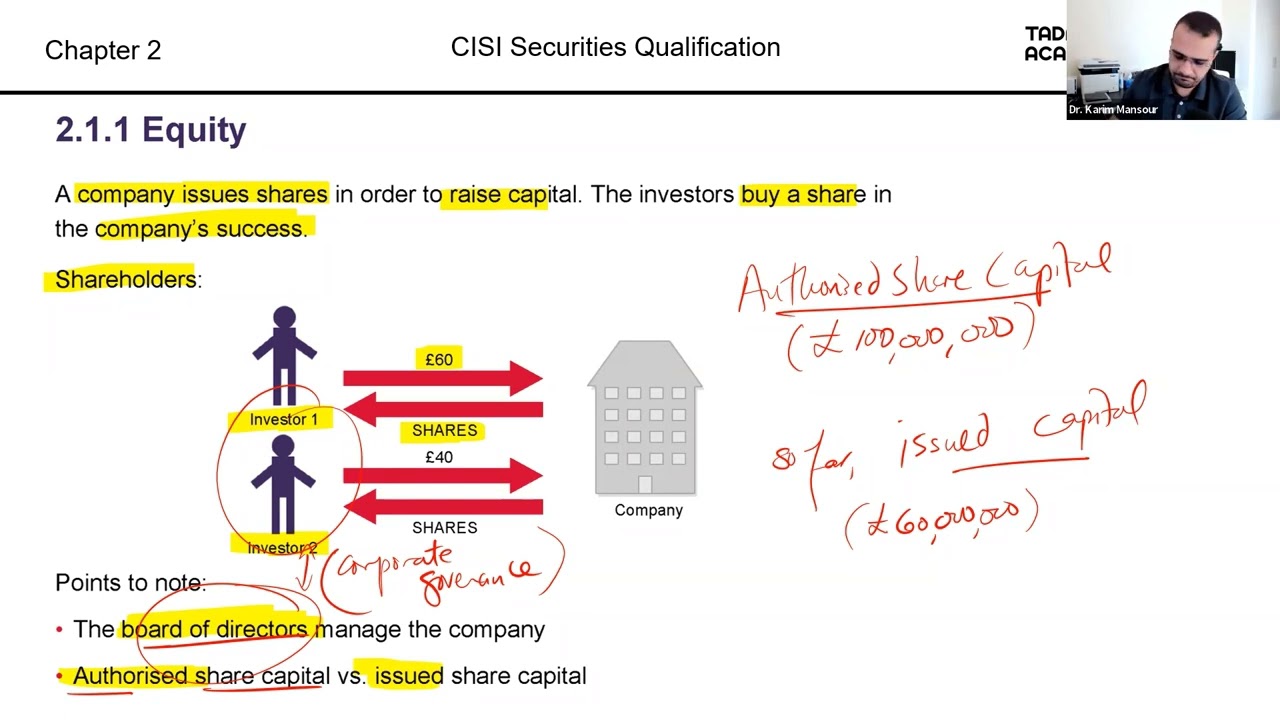
Video lectures
Mock exam questions
Exam preparation highlights
Ask the trainer where really responding back to any questions you have.
Much appreciation
Mr karim Mansour

Highly Recommended

The video lessons, summaries, and mock exams cover all the key concepts from the study materials and really helped me focus on what matters most. You also get valuable insights into the real exam structure and question style, which makes a big difference.
Special thanks to Dr. Karim Mansour – your support and clear explanations made the entire process much easier. Thanks again!
What is included
- Recorded video lectures covering every element of the syllabus, chapter by chapter
- Chapter summary slides and study notes for revision
- Multiple-choice practice questions designed around the CISI examination format, organised by chapter
- An Ask the Trainer section for questions on the material
- Three months access to the premium job vacancies in the UK, the GCC, Egypt and India
- We DON’T offer live classes.
- Exam fees are NOT included in the course price. They are paid separately to CISI.
- Official CISI study book is NOT included in the course price. CISI doesn’t allow us to distribute it. You can get it from them when you book the exam.
The practice questions are written by Tadawul Academy for preparation. CISI doesn’t publish official exam questions or past papers.
Every subscription includes 3 months access to our banking and finance job listings. Hundreds of current openings in capital markets, trading, brokerage, settlement and investment banking across banks in London, Dubai, Abu Dhabi, Saudi Arabia, Qatar, Egypt and India — including desk roles that ask for CISI qualifications by name. No other CISI training provider gives you this.
The CISI Securities exam is 100 multiple-choice questions in two hours, and the marks are spread far less evenly than a nine-element syllabus suggests. Element 2, Asset Classes, is 27 questions on its own. Add Primary Markets and Secondary Markets and three elements carry 56 of the 100 marks. Element 3 is titled Markets and carries two. This course covers all nine elements while putting your study time where the marks actually sit.
Work through the syllabus at your own pace alongside the official CISI workbook, then use the practice questions to find the elements still costing you marks before you book.
Try Two Chapters Free → Create an account on our e-learning portal and see the lectures, slides and questions before you buy.
- 95% pass rate among our students.
- Over 1,000 five-star Google reviews.
- Fully recorded and self-paced — start today, study at any hour.
The CISI examination is booked and paid for separately, directly with the CISI. The price on this page covers the Tadawul Academy preparation course only. Current CISI fees are set out below.
Who this Securities course is for
Securities is written for the wholesale side of the market — the people who deal, trade, issue and settle rather than advise retail clients:
- Traders, dealers and sales staff on equity and fixed income desks
- Brokers, broker-dealers and inter-dealer brokers
- Settlement, custody and corporate actions staff in operations
- Investment banking staff working on IPOs, follow-on offerings and bond issues
- New entrants who need a recognised benchmark qualification before taking a desk role
There are no entry requirements. CISI advises proficiency in English to CEFR B2 level, since the questions test close reading as well as knowledge. One warning worth giving early: Element 8 assumes you can read a set of financial statements and calculate ratios from them. If that is new to you, plan extra time rather than leaving it to the last fortnight.
What passing the Securities exam awards you
Read this before you book anything. Securities on its own does not award a certificate. It is one of two units making up the CISI Capital Markets Programme, which is completed by passing one regulatory unit and one technical unit. Securities is the technical unit; the alternative is Derivatives. For the regulatory unit you take UK Financial Regulation or the paper for your own jurisdiction — UAE Financial Rules and Regulations, Kuwait Rules and Regulations, Qatar Financial Centre Rules and Regulations, or Kenya Regulations and Market Practice. Where a local regulator sets its own exam, CISI may accept that instead, on application and payment of an exemption fee.
Pass both units and Ofqual recognises the result as the CISI Level 3 Certificate in Securities, the title that appears on your certificate; on the European Qualifications Framework it sits at level 4. Total qualification time is 183 hours across both units. Completing the Programme entitles you to apply for CISI Associate membership and the letters ACSI, and CISI presents the Capital Markets Programme as ESMA and MiFID II compliant. You hold free CISI Student membership while studying.
One exemption rule saves a fee: if you already hold the regulatory unit from the Investment Operations Certificate, you are automatically exempt from the same unit here, and it works in the other direction too. Apply before you sit the first unit, and note you can claim only one exemption per qualification.
What the CISI Securities exam covers
The current specification is syllabus version 25, effective from 22 March 2026. Nine elements, with the number of questions each contributes:
| Element | Questions | What to prepare for |
|---|---|---|
| 1. The Financial Services Industry | 3 | Retail against wholesale business, and where banks, fund managers, stockbrokers and custodians sit in each. |
| 2. Asset Classes | 27 | Cash and money market instruments, repo, ordinary and preference shares, debt instruments and yields, government and corporate debt, Eurobonds, depositary receipts, warrants, property, foreign exchange, collective investments and structured products. |
| 3. Markets | 2 | What separates a primary market from a secondary one, and who uses each. |
| 4. Primary Markets | 14 | IPOs, follow-on offerings, offers for sale, placings and introductions; syndicate roles, underwriting and stabilisation; listing criteria; bond issuers and issuance methods. |
| 5. Secondary Markets | 15 | Exchanges, dark pools and multilateral trading facilities; quote-driven against order-driven trading; market makers and systematic internalisers; algorithmic trading; order types; central counterparties; indices; bond dealing methods. |
| 6. Corporate Actions | 7 | Dividends and coupons, bond repayment events, bonus issues and stock splits, rights issues and nil paid rights, buybacks, stake building and takeover thresholds. |
| 7. Clearing and Settlement | 8 | Clearing stages and delivery versus payment, custody and nominee structures, registered against bearer title, cum and ex dealing, continuous linked settlement, and stock lending. |
| 8. Accounting Analysis | 14 | Financial statements under IFRS — position, comprehensive income and cash flows — plus depreciation, reserves, group accounts, and ratio analysis for profitability, liquidity, gearing and investors. |
| 9. Investment Management | 10 | Risk and reward by asset class, systematic against specific risk, correlation and diversification, hedging, ranking on liquidation, and active, passive and ESG approaches. |
| Total | 100 | All nine elements remain examinable. |
The count for any element can shift by up to two questions between papers, but the shape holds. Elements 2, 4 and 5 are 56 marks between them; add Element 8 and four elements carry 70 of the 100. At the other end, Elements 1 and 3 are five marks together — an evening’s work, not a week’s.
The other thing to plan for is that this paper asks you to calculate, not only to recognise. Work through these with a pen before the exam, not during it:
- Simple interest on corporate debt, flat yield, and accrued interest under day count conventions
- The present value of a bond of up to two years, with annual coupon and interest income
- Conversion premiums on convertible bonds, and whether converting is worth it
- Spot and forward settlement prices, including forward rates by interest rate parity
- The effect of a bonus issue, stock split or reverse split on the share price
- Rights issues: the effect on the share price, the value of the nil paid rights, and how many rights to sell to take up the balance at no cost
- Element 8’s ratios — return on capital employed, assets and equity; debt to equity, net debt to equity and interest cover; basic and diluted earnings per share, historic and prospective price/earnings, dividend yield and cover, and enterprise value to EBIT and EBITDA
View the official CISI Capital Markets Programme page or download the official version 25 Securities syllabus. CISI publishes amendments in its Candidate Update area between syllabus editions, so check it before you sit.
Securities exam format
| Questions | 100 multiple choice |
|---|---|
| Duration | 2 hours |
| Pass mark | 70% — 70 correct out of 100 scored questions |
| Prerequisite | IntegrityMatters, an online integrity test, for candidates sitting in the UK, Ireland, Europe and North America. It must be passed before the exam. |
| Total qualification time | 183 hours for the full Level 3 Certificate in Securities, covering this unit and the regulatory unit together |
| Delivery | Computer-based test, on demand |
| Where | CISI’s global test-centre network, or online by remote invigilation |
| Trial questions | Up to 10% extra unscored questions may appear. They are not identified, they do not count towards your result, and you are given proportionately more time. Not every paper contains them. |
| Results | Available in MyCISI within 24 working hours, provisional for five working days |
| Resits | Up to six attempts at the same subject in any rolling 12-month period. After three attempts within a 12-month period, a six-week rest period applies, counted from the date of the third sitting. |
Two rows catch people out. The resit rule runs on a rolling 12 months from each sitting, not a calendar year. And IntegrityMatters takes 30 to 50 minutes but should not be left until exam week: if you have not passed it 24 hours before your start time, CISI cancels the booking and charges a £50 rebooking fee.
What the CISI Securities exam costs
CISI’s own fees, separate from the price of this course. From the CISI price list covering 1 April 2026 to 31 March 2027, checked 4 August 2026. What you pay depends on where you book.
Booking in the UK
- Exam: £286
- Workbook, mandatory with the booking: £105
- Exam, workbook and Revision Express together: £406
Booking internationally
- First sitting: £406, including the workbook and Revision Express access where available
- Resit within the same syllabus version: £286
- Some countries add a local invigilation fee
Other CISI fees
- Qualification Registration Fee: £68, paid once, on your first CISI qualification
- Revision Express bought on its own: £45
- Performance Review after a failed attempt: £40, and free once you have failed the same subject three times
Because the certificate takes two units, this paper is not the full cost: CISI publishes a total exam fee of £533 and a total workbook fee of £210 for the Capital Markets Programme. Budget against those, not against £286. The Performance Review is worth knowing about too — it breaks your score down element by element, which on this paper is the difference between revising all nine again and revising the one that cost you the pass. Fees are reviewed annually, so confirm on the current CISI price list before booking.
How to plan your Securities study
CISI puts total qualification time at 183 hours, but that covers the regulatory unit as well and CISI does not split it between the two. Securities is the larger paper, so most of it belongs here. Two schedules for this unit alone:
- Fourteen weeks at around 9 hours a week
- Nineteen weeks at around 6 to 7 hours a week
These are our suggestions, not CISI rules. Whichever you pick, order the material by weight rather than chapter number:
- Weeks 1–4. Element 2, 27 marks and the largest single block on the paper. It supplies the instrument vocabulary that Elements 4, 5, 6 and 9 assume you have, so there is no sensible way to start elsewhere.
- Weeks 5–7. Elements 4 and 5 — 29 marks together, both building on Element 2. Issuance and trading are easier to hold as one topic than two.
- Weeks 8–9. Element 8, 14 marks and self-contained. Give it more time than its share suggests if accounting is new to you: ratios need repetition rather than reading.
- Weeks 10–12. Elements 6, 7 and 9 — 25 marks, and Element 6 carries the rights and bonus issue calculations.
- Weeks 13–14. Elements 1 and 3 — five marks between them, one session — then mixed timed papers across the whole syllabus.
Start the practice questions around the halfway point rather than saving them for the end — they show where your recall is weak while there is still time to fix it. Book the exam once you are clearing 80% on mixed practice sets, which leaves margin for exam-day pressure.
Where candidates lose marks
- Giving all nine elements equal time when four of them carry 70 marks.
- Reading the formulae rather than working them until they are automatic.
- Treating Element 8 as reading. It is 14 marks of arithmetic and interpretation.
- Studying from a superseded syllabus or workbook edition — check yours covers examinations from 22 March 2026.
- Missing the amendments CISI issues in its Candidate Update area after the workbook is published.
Using this course with the CISI workbook
The CISI workbook is the definitive examination text. Tadawul Academy adds guided explanations, revision slides, practice questions and trainer support so you can work through that text systematically and identify the topics that need more revision.
- Watch the lecture for the chapter.
- Read the matching workbook section.
- Review the summary slides.
- Answer that chapter’s practice questions.
- Revisit anything you answered incorrectly or guessed.
At Level 3 you are expected to apply what the workbook explains to situations it does not spell out, and an answer can draw on more than one part of the book: a corporate actions question can turn on a settlement convention from Element 7 and a share class feature from Element 2 at once. That is why practice questions matter more than re-reading.
Before you enrol
- We do not run classroom training or live online sessions. This is a self-paced e-learning package of recorded video lectures, study notes and practice exams.
- You can create a free account on our e-learning portal and try two chapters before buying.
- After you order, we activate your account and email confirmation within a few hours. Please check your email address is correct when you place the order.
- When your access expires, place a new order here to extend it.
- You need the current CISI Securities workbook. We are not permitted to supply it — CISI does, as part of your exam booking, under its mandatory workbook policy. Format and delivery differ between UK and international bookings, so confirm the arrangement with CISI when you book. Study it properly before you sit.
Book the Securities examination with CISI
Frequently asked questions
Do I need the CISI workbook as well as this course?
Yes. The workbook is the examination text and CISI requires it to be purchased with your exam booking. This course does not replace it — it adds lectures explaining the harder parts, worked calculations, slides to revise from, and practice questions to test whether the reading has stuck.
How much does the CISI Securities exam cost?
Booking in the UK, £286 for the exam plus £105 for the mandatory workbook, or £406 for both with Revision Express. Booking internationally, £406 for a first sitting with the workbook included, and £286 for a resit within the same syllabus version. Add a one-off £68 registration fee if this is your first CISI qualification, and check whether a local invigilation fee applies in your country. The certificate needs a regulatory unit too: CISI puts the total exam fee for the Capital Markets Programme at £533. Figures from the CISI price list for 1 April 2026 to 31 March 2027.
Are there mock exams and practice questions?
The course includes multiple-choice practice questions written around the CISI examination format, organised by chapter so you can test each element as you finish it, plus mixed sets once you have covered the syllabus. They are our own questions — no provider has access to CISI’s live questions.
Does passing Securities give me the CISI Level 3 Certificate in Securities?
Not on its own. The certificate is awarded for the Capital Markets Programme, which takes a regulatory unit as well as this technical one — UK Financial Regulation or the paper for your jurisdiction. Ofqual recognises the pair as the CISI Level 3 Certificate in Securities.
Is this the Level 3 Securities exam or the Investment Advice Diploma one?
This course prepares you for the Level 3 Securities unit of the Capital Markets Programme, priced by CISI at £286. There is a separate Securities unit inside the Level 4 Investment Advice Diploma at £304 — a different exam with a different syllabus. Longer-standing students may know this unit by its former name, Global Securities. Check the unit name and level before you pay.
How long does Securities preparation take?
CISI publishes 183 hours for the certificate, covering this paper and the regulatory unit together. For this paper alone, plan fourteen weeks at 9 hours or nineteen at 6 to 7. Most candidates spend longer than planned on the bond arithmetic and the financial statements.
Does this course include live classes?
No. Everything is recorded and self-paced. For questions on the material, use the Ask the Trainer section and you will get a written answer.
How quickly is my account activated?
Within a few hours of your order, and we email you to confirm. The most common cause of delay is a mistyped email address at checkout.
Is the job board really included?
Yes, at no extra cost, for three months from activation. It lists current vacancies in capital markets, trading, brokerage, settlement and investment banking across the UK, Dubai, Abu Dhabi, Saudi Arabia, Qatar, Egypt and India, with CISI qualifications named in the requirements for many of the dealing and operations roles.
What happens if I fail, and how many resits am I allowed?
Up to six attempts at the same subject in any rolling 12-month period, with a six-week rest period after the third attempt in that period. A resit within the same syllabus version costs £286 booked internationally. If you fail the same subject three times, CISI provides a Performance Review free of charge, showing your score element by element.
NEED HELP?
Still Have a Question?
If you have read the course information and still need help, send us a WhatsApp message.
Free Videos From Our YouTube Channel


Ethan Price –
I found the trainer easy to listen to. I would have liked more calculation questions. Overall, I am happy with it.
Riya Bose –
Quite good and easy to work through. The tutor explained the calculations clearly. The mobile layout was not always ideal for me.
Felipe Benitez –
Some videos felt longer than they needed to be. It was helpful once I worked out my own study routine. Three stars for now.
Liam Sullivan –
Really solid course. The final week felt a lot less stressful. The videos made the difficult chapters much easier to understand.
Marta Petrov –
Great course and easy to work through. The difficult topics finally started to click. No complaints from me.